

Rapido Trains reveals three new GCR wagons for 'OO'
Rapido Trains UK has today announced an all-new range of Great Central Railway wagons for 'OO', featuring completely new toolings. The announcement covers three historically significant wagon types, each sharing a common steel underframe design and offering wide layout appeal across multiple eras.
Pre-orders are now open, with no up-front deposit at our competitive prices and optional customisation.
GCR Dia. 17B covered vans
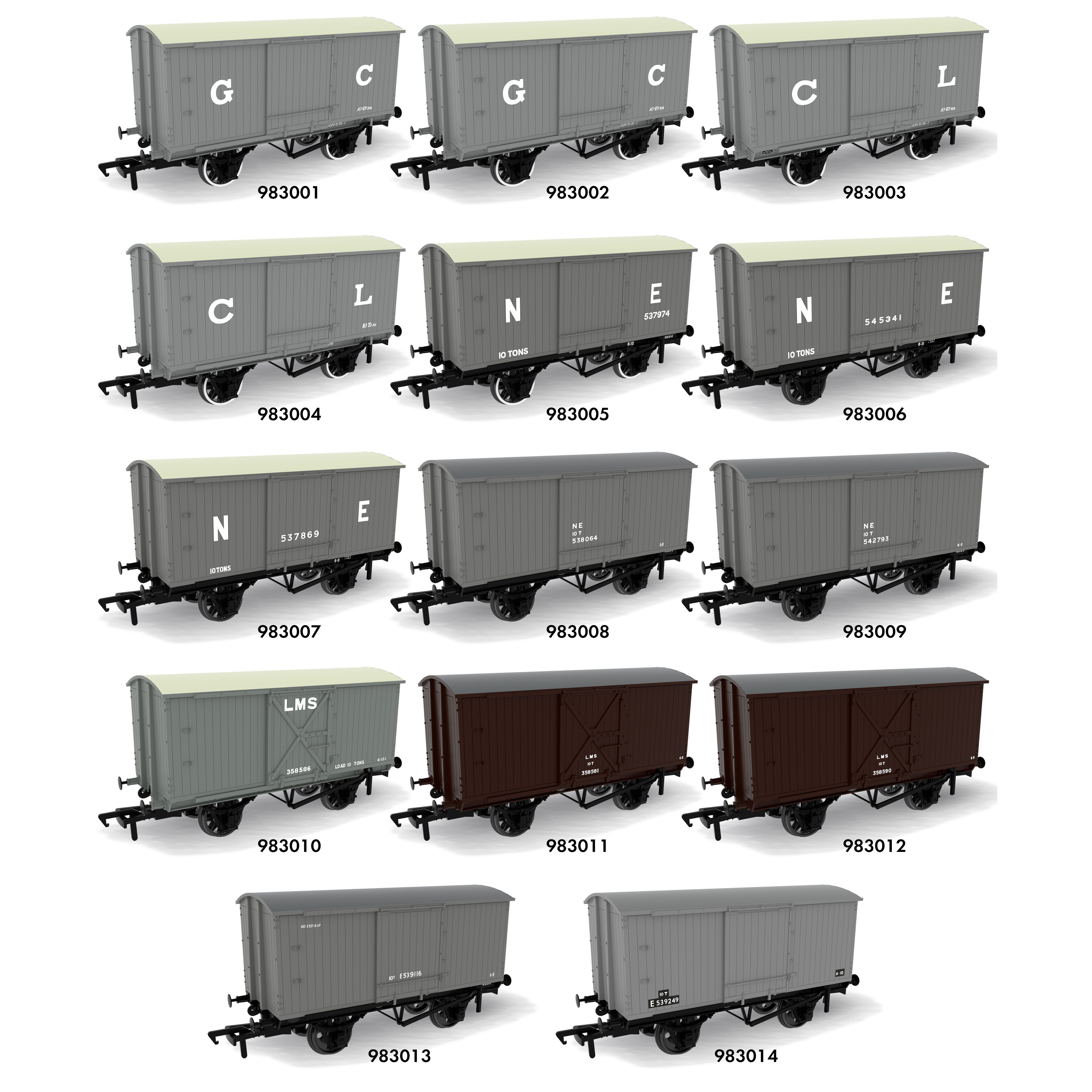
Introduced by the Great Central Railway in 1910, the Diagram 17B was a 19ft unfitted covered van with a steel underframe and sliding side doors. Designed as a general-purpose wagon, it was used extensively across the GCR network and beyond. The lack of roof or end vents limited its use for perishable traffic, but it remained a versatile goods vehicle.
The design was also adopted by the Cheshire Lines Committee (CLC), jointly owned by the GCR, Midland Railway and Great Northern Railway. A total of 270 vans were built for the CLC by the Metropolitan Carriage, Wagon & Finance Co. at Oldbury. These were initially produced without external end stanchions, though many were later modified to match GCR-built examples.
When the CLC fleet was divided in 1929, one third passed to the LMS and two thirds to the LNER, creating the unusual situation of a single wagon diagram split between two companies. The LNER reclassified its share as Diagram 43B. Several examples survived into British Railways ownership.
GCR Dia. 9A & 9B six-plank open wagons
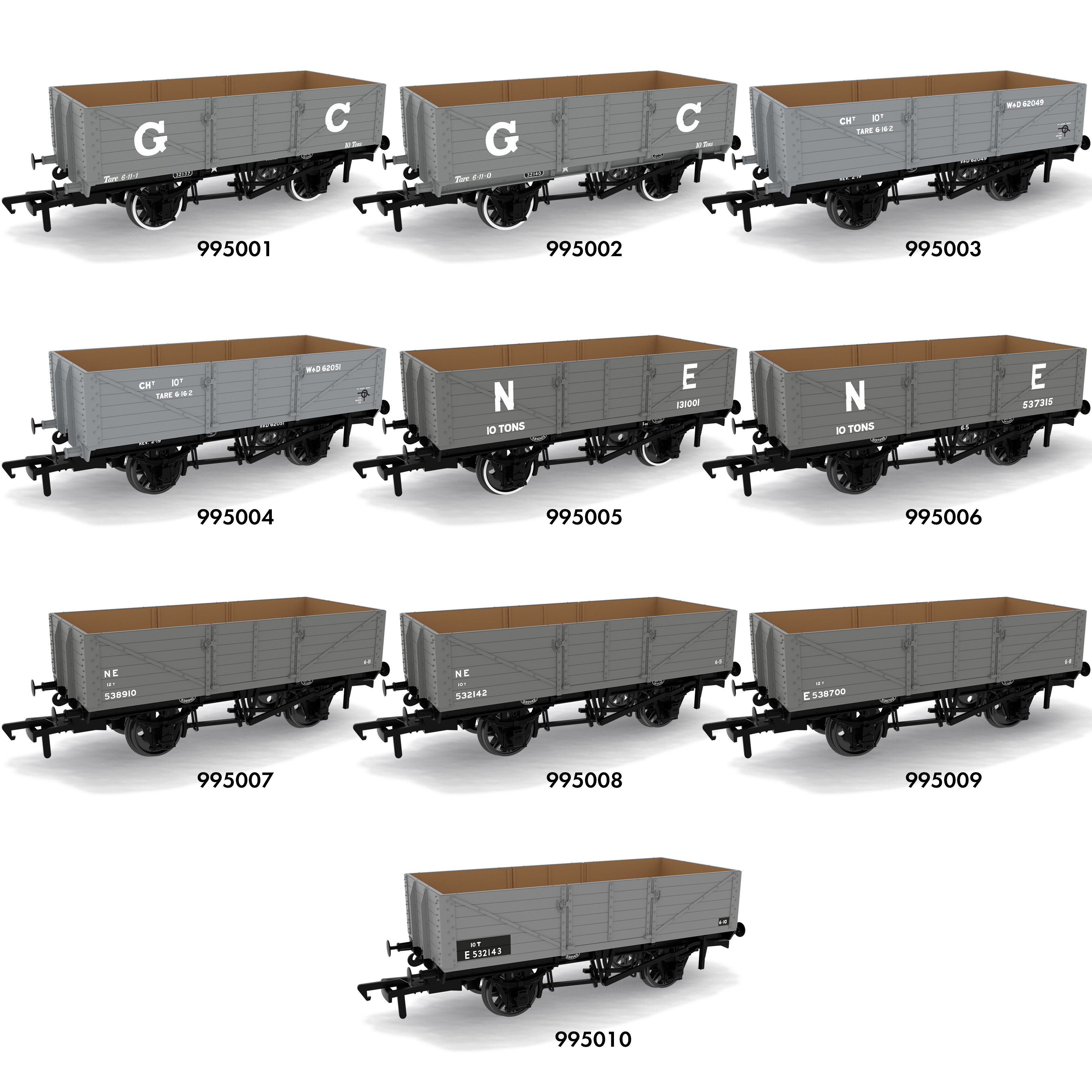
Introduced in 1911, the Diagram 9A and 9B wagons were six-plank open wagons designed to increase capacity over the earlier five-plank standard.
Diagram 9A was rated at 10T, originally fitted with single-sided brakes, later revised to brakes on both sides.
Diagram 9B increased capacity to 12T and was fitted with RCH split axleboxes, though outwardly similar.
More than 2,000 wagons were built, making them among the most numerous wagons on the GCR. Both types were used for a wide range of general goods and minerals. No examples were built for the CLC; all survivors passed to the LNER, which significantly expanded Diagram 9B production during the 1920s. Over 250 of each type transferred to British Railways in 1948.
GCR Dia. 6C three-plank open wagons
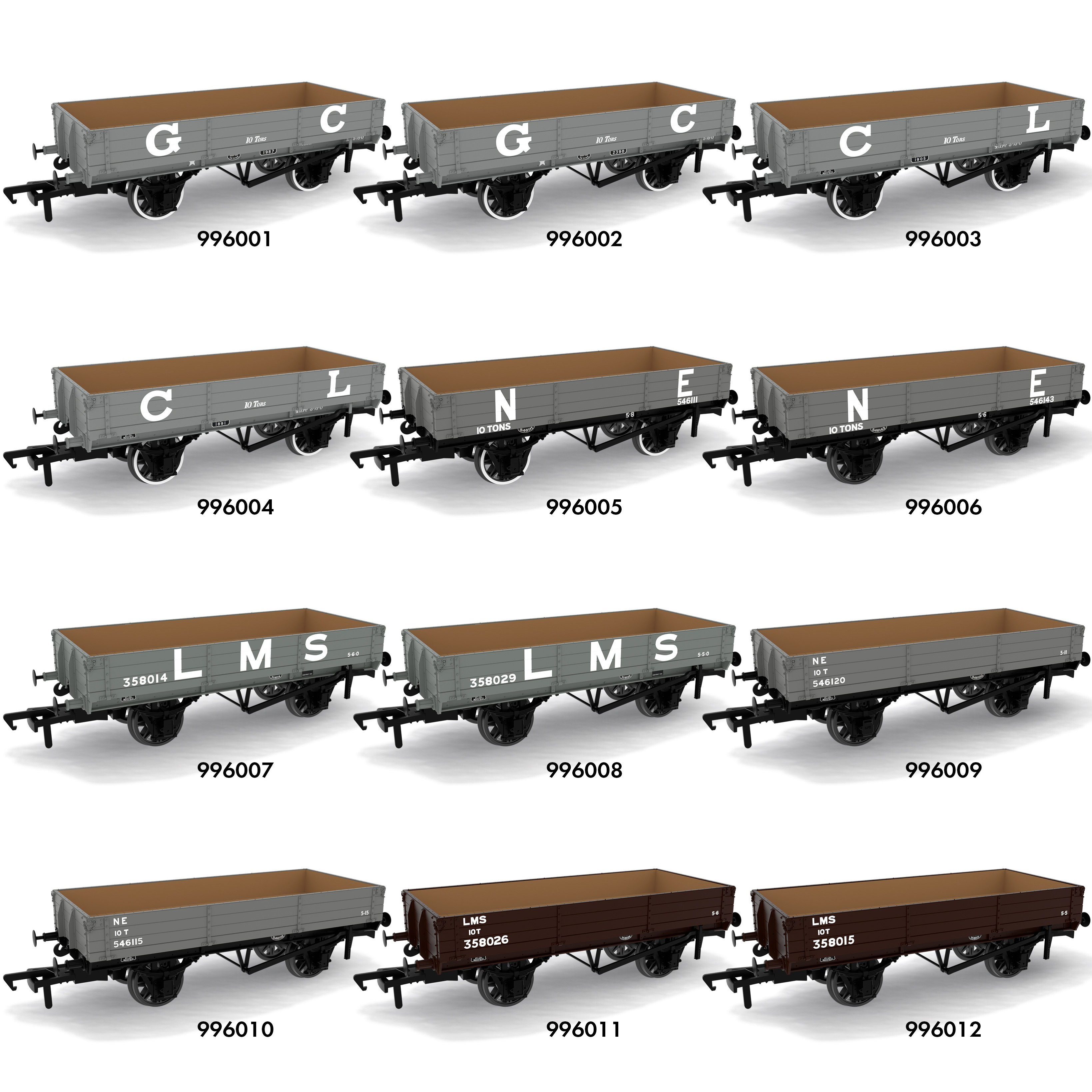
The Diagram 6C was a 10T three-plank open wagon, sharing the same steel underframe as the other designs. Built for both the GCR and the CLC, it featured dropside doors on both sides, GCR lifting-link brakes and ribbed buffers.
Of the 50 wagons built for the CLC in 1919, 49 survived until 1930, when they were divided between the LNER and LMS in the same manner as the Diagram 17B vans. These joined former GCR examples already absorbed by the LNER, though little is recorded about their later service lives.
Ordering information
Production quantities are closely matched to demand, and pre-orders are strongly recommended to avoid missing out. All models are available with optional customisation, including weathering and wagon loads. Use the links above to secure yours.