

Now at TMC: new magnetic couplings by Rusty Rails
Reliable coupling systems are one of the holy grails of railway modelling. While traditional tension locks and other coupling designs have served modellers well for decades, many continue to search for a more realistic and practical solution.
Now, Rusty Rails has unveiled an innovative new range of 3D-printed magnetic couplings, designed to fit standard NEM pockets and offer a simple, powerful and highly refined alternative for ‘OO’ modellers.
With items now stocked at TMC, we spoke to Rusty Rails owner Michael Birch to learn more about his development process behind the new range.

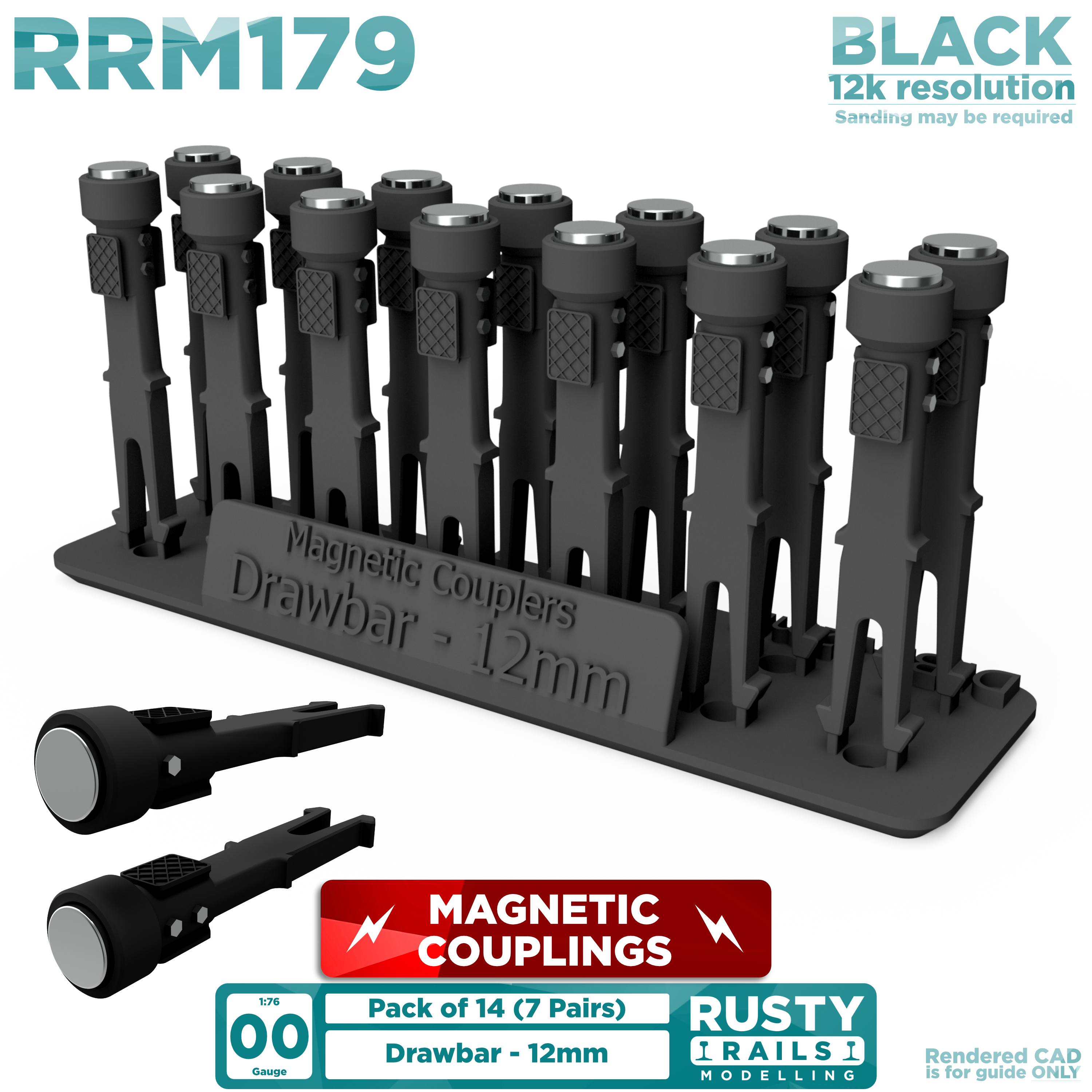
RRM179 and RRM180 – two new 3D printed couplings with magnet inserts for 'OO' by Rusty Rails.
Howard Smith: These couplings look deceptively simple. How much development went into creating them?
Michael Birch: Much more than people might expect! In total, I produced over 75 different versions just to complete the base design. Every adjustment taught me something new about the coupling geometry, tolerances, strength and assembly process.
When you're designing a component this small, tiny changes can make a huge difference. What looks simple on the finished product is the result of weeks of testing, redesigning and refining.
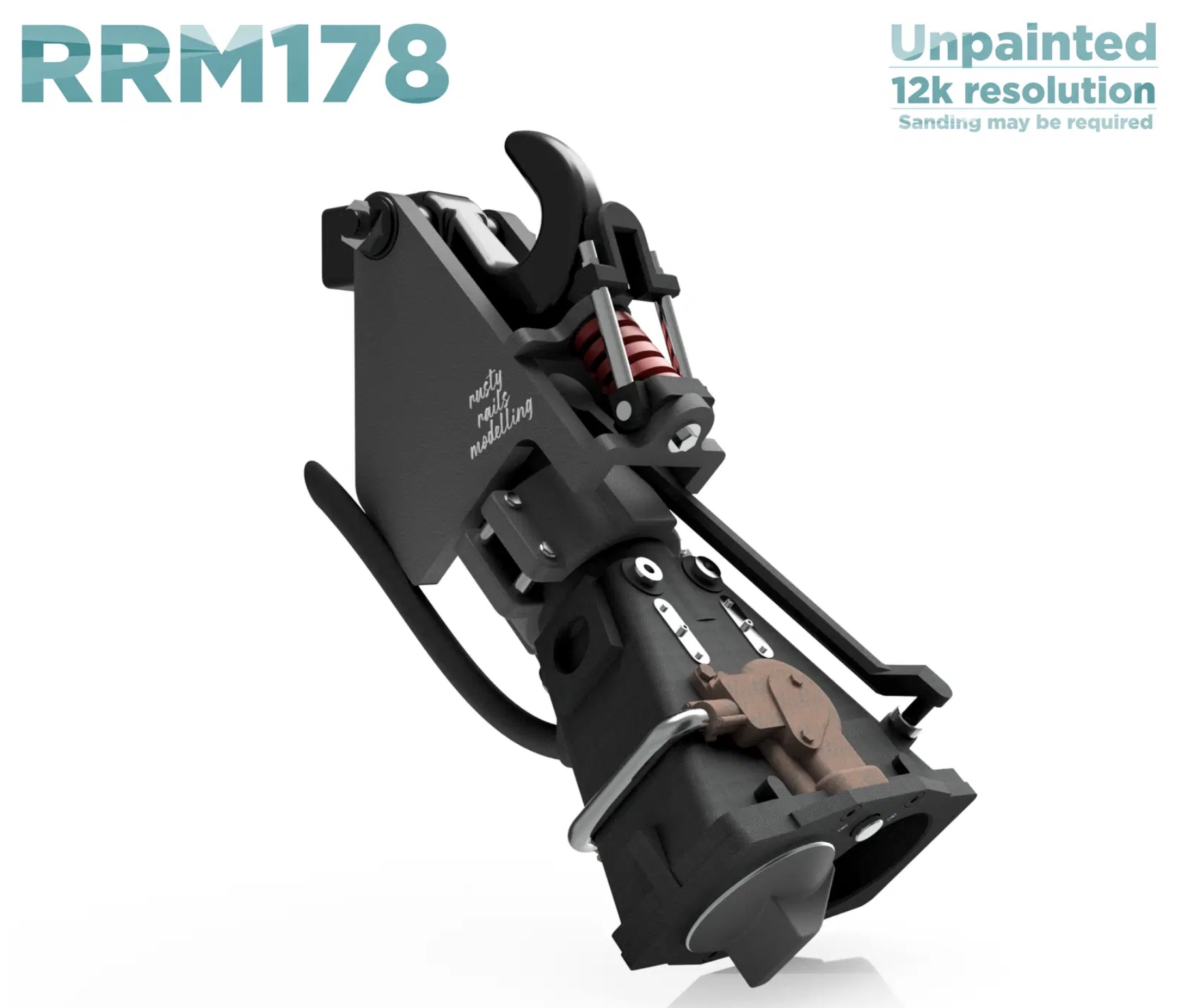
A new RRM178 OO Gauge Dummy Dellner Coupler (4 Pack) as a 3D-printed unpainted model also joins the range. Such couplings have been fitted to Class 37s operated by Europhoenix and Class 92 on the Caledonian Sleeper.
H: What proved to be the biggest challenge?
M: The assembly process was probably the most difficult part of the project.
Initially, the couplings were designed as a friction-fit assembly. However, because resin can expand slightly and curing times vary, I found that approach wasn't consistent enough for reliable production.
I then experimented with superglue but quickly realised the assembly time would be far too long. Switching to brush-on superglue improved things but introduced another challenge: the adhesive often started curing before I could fit the 3D-printed coupling housing over the magnet.
It became clear that I needed a completely different solution.
H: How did you solve that problem?
M: Through a lot of trial and error! Eventually I designed a completely bespoke assembly rig specifically for these couplings. The rig allows resin to be deposited precisely onto every magnet before the magnet is inserted into the coupling housing.
It sounds straightforward now, but it took a considerable amount of development work to achieve a process that was both repeatable and reliable. Consistency was essential because I wanted every coupling to perform exactly as intended.
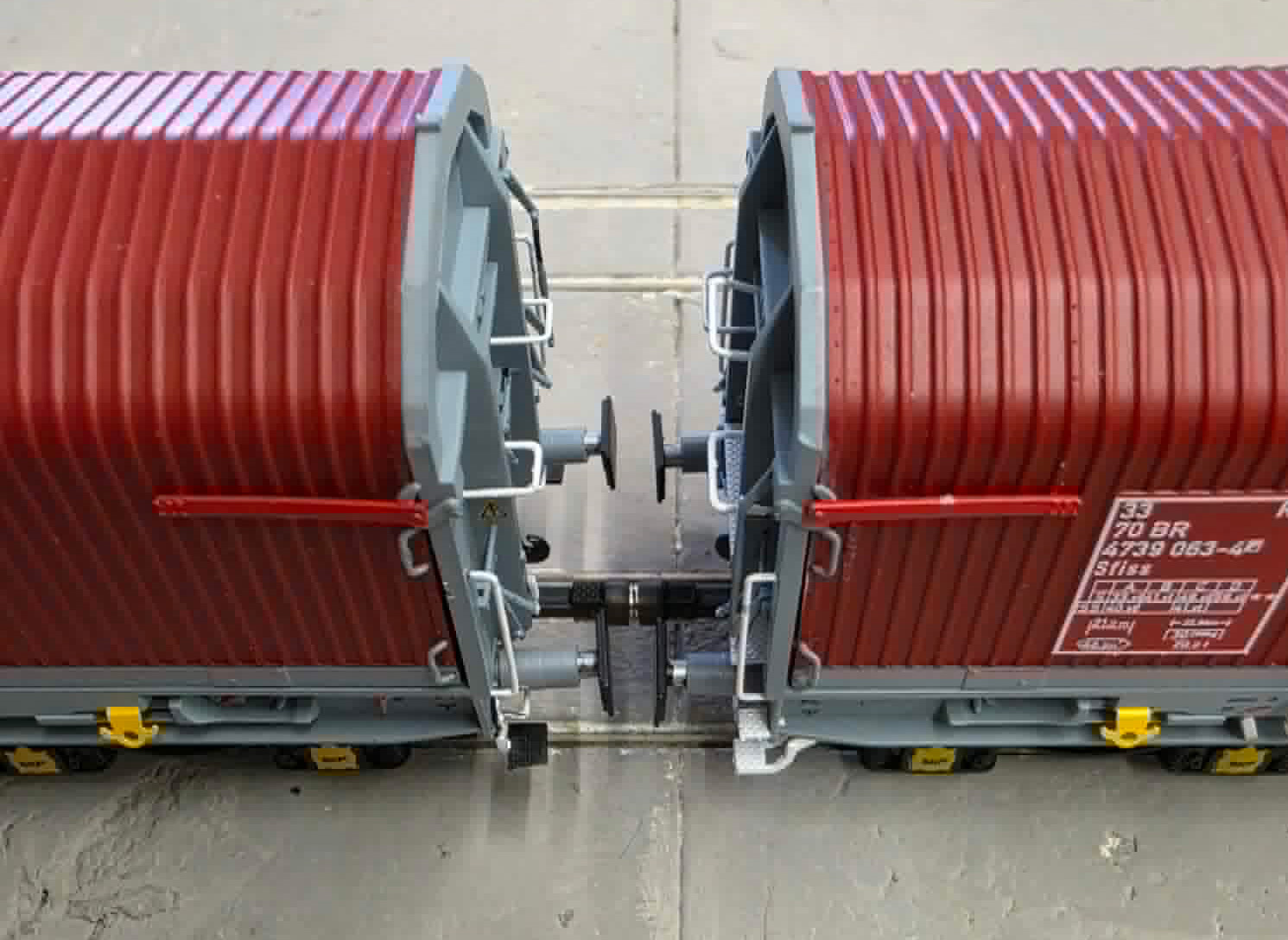
In use the couplings are discreet, more-so if weathered to match rolling stock.
H: Magnetic strength is crucial. How did you determine which magnets to use?
M: I tested a huge range of magnets before settling on the final specification. In the end, I chose N52 magnets, which are widely regarded as the strongest commercially available grade. The results exceeded my expectations. In many situations, the locomotive's wheels will begin to slip before the magnetic connection breaks apart. That level of pulling power was exactly what I wanted to achieve.
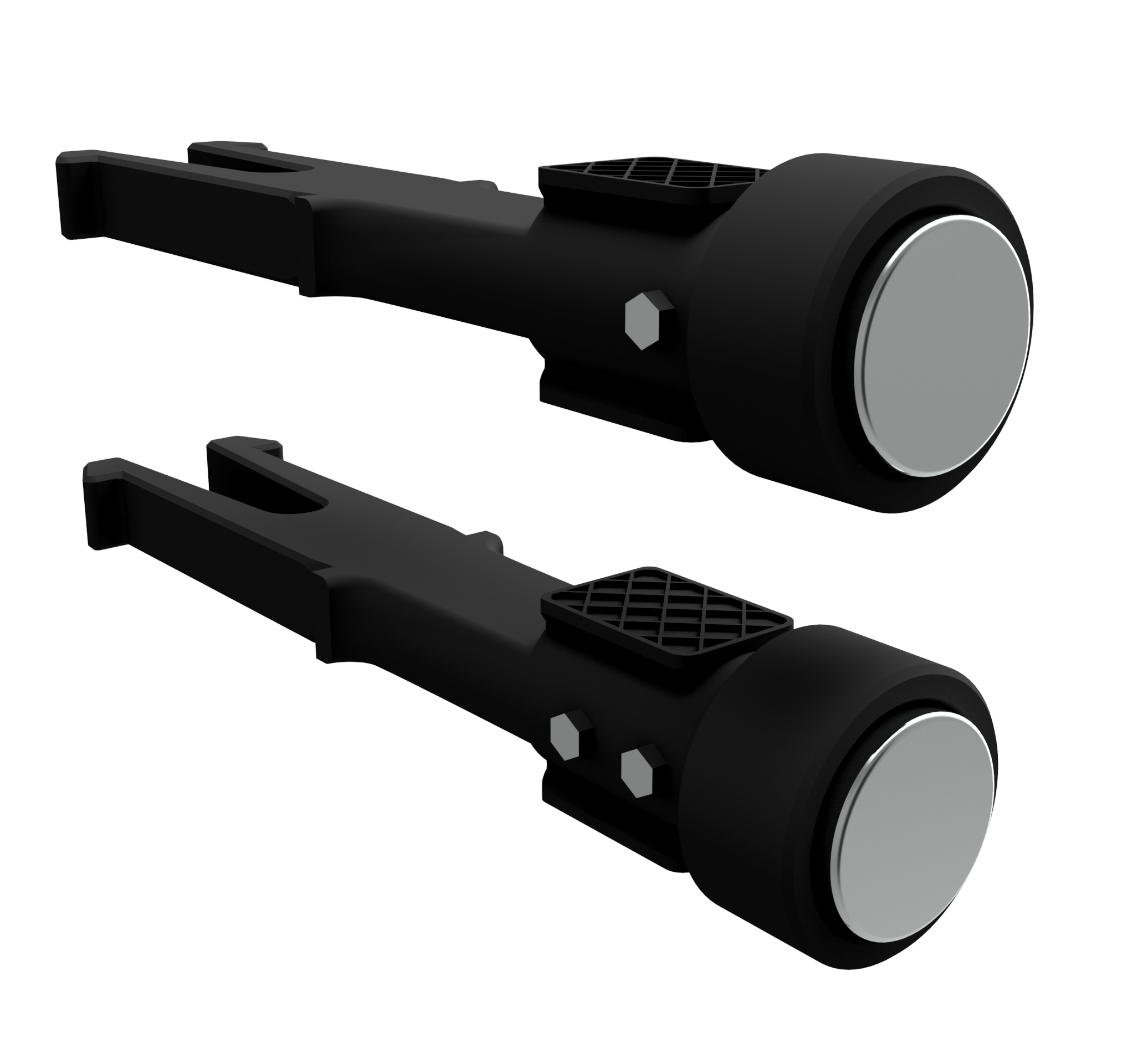
H: Who are these couplings aimed at?
M: They're ideal for modellers who want a cleaner appearance, reliable operation and a simple installation process. The couplings fit directly into standard NEM pockets, making them suitable for a wide range of modern OO gauge rolling stock and locomotives. They've been designed to offer strong, dependable magnetic coupling while remaining discreet and easy to use.
H: Is there anything customers should be aware of before ordering?
M: The key thing to note is that these couplings are designed for standard NEM sockets. They are not compatible with stepped NEM pockets, such as those fitted to certain models including some Bachmann Mk.1 coaches. As always, customers should check compatibility before ordering.