

Inbound and in-demand: new EFE Rail Plasser & Theurer cranes
We're very pleased to see EFE Rail's Plasser & Theurer 12T YOB cranes return for 'OO' in February/March in two new guises. As previous models were quick to sell-out, we're urging customers to secure pre-orders today of these most-popular of liveries:
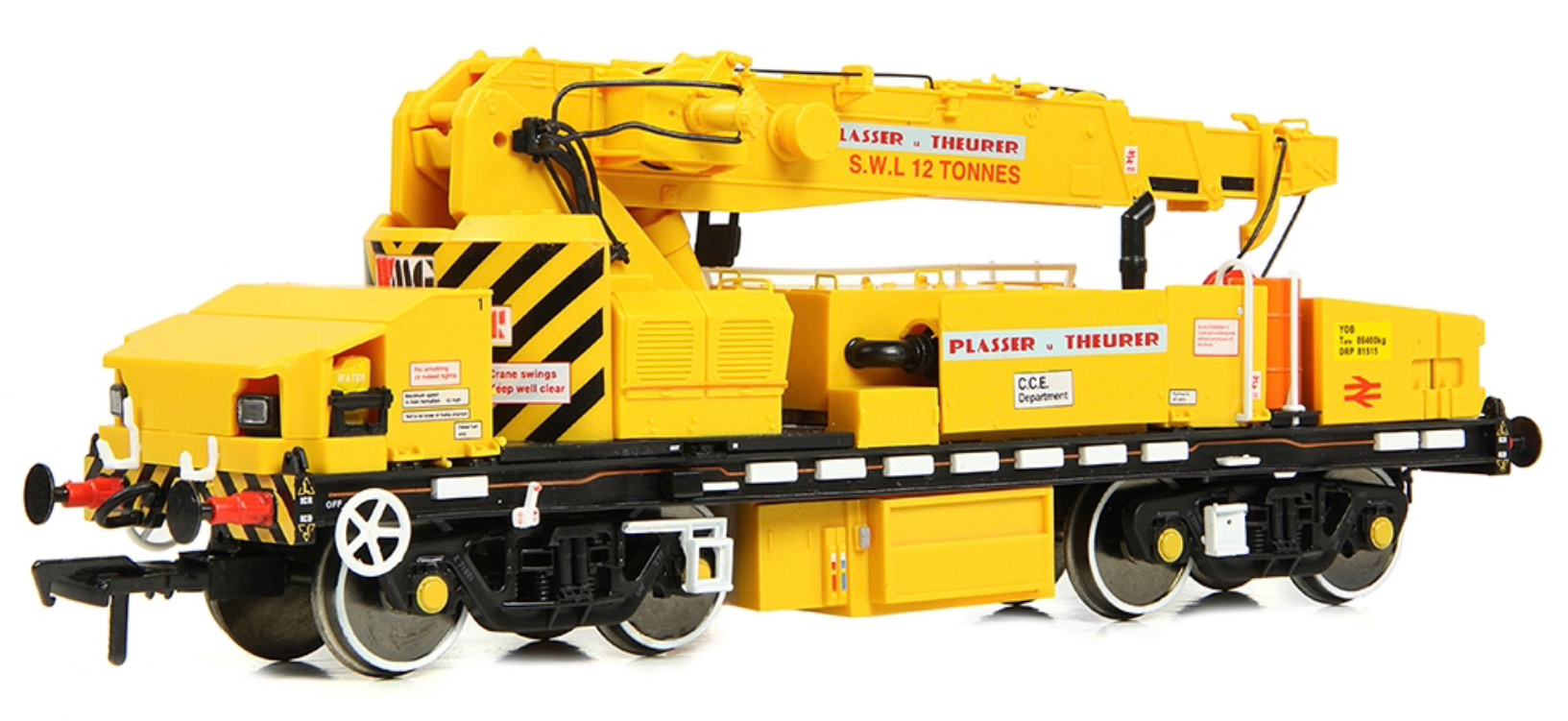
E87108 EFE Rail OO Gauge Plasser 12T YOB Diesel-Hydraulic Crane DRP81515 BR Departmental Yellow
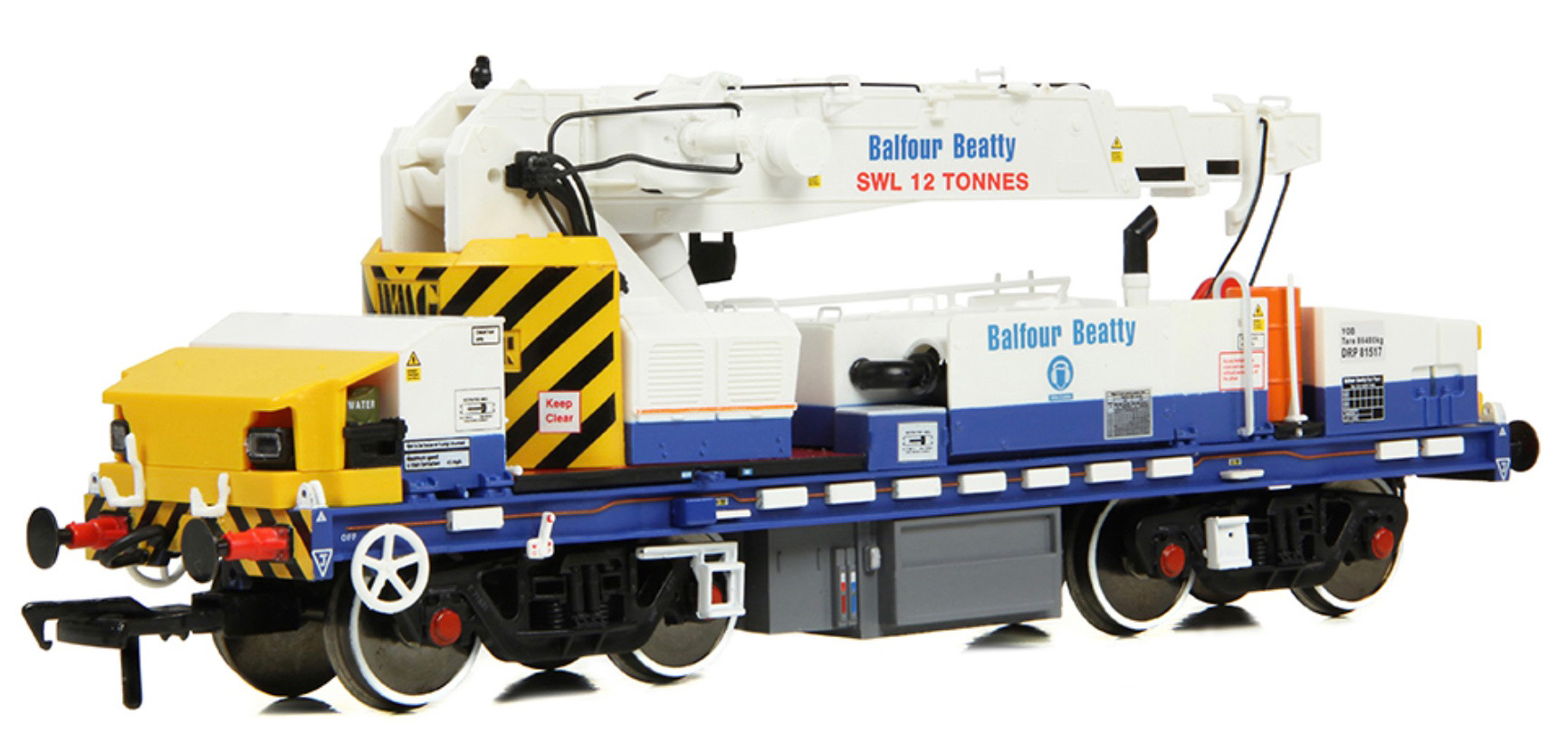
E87109 EFE Rail OO Gauge Plasser 12T YOB Diesel-Hydraulic Crane DRP81517 Balfour Beatty
A familiar sight on Britain’s railways from the mid-1970s onwards – and today around heritage railways – known under the TOPS code YOB, these compact, self-propelled cranes became a mainstay of engineering operations across the network. Primarily deployed to track relaying sites, YOBs would travel to work locations as part of engineering trains before going to work under their own power once on site.
Despite their modest size, these cranes punched well above their weight. Being self-propelled allowed them to reposition around work sites and even carry out light shunting duties during engineering possessions. Crucially, their no tail-swing design meant they could be operated safely while an adjacent line remained open to traffic — a key advantage on busy routes.
Landmark 'OO' models
The new EFE Rail models bring these important pieces of On Track Plant (OTP) to 'OO', making them an essential addition for modellers of the modern railway era.
Extensive fine detailing is present throughout, capturing the unmistakable character of these hard-working machines. From the distinctive crane body to the underframe and running gear, the models convincingly represents a vehicle that played a vital role in keeping the railway moving.
With a high level of decoration including the many markings and safety warnings seen on the prototype, each model is supplied with an accessory pack containing a set of bufferbeam parts – these can be fitted if the standard coupling is removed first. Removal of the couplings is simple thanks to the use of NEM coupling pockets, which are attached via close-coupling mechanisms. Being unmotorised, each bogie is fitted with metal wheelsets mounted on pin-point axles, with the wheel tyres decorated accordingly. The crane is modelled in the stowed position.