
Imminent engineering wagon arrivals for 'OO' from Revolution Trains
These 'Borail'/'Mullet'/'Parr' and 'Super Tench' wagons are arriving imminently from Revolution Trains to bring an impressive range of classic and modern British freight wagons to life, covering the BR Borail 'fishbelly' flats and their later air-braked derivatives—'Mullet', 'Parr', and 'Super Tench'.
These highly adaptable wagons have played a vital role on Britain’s railways since the late 1950s, with many still in service today.
Explore the complete range to secure yours today, here!
BR 'Borail' origins

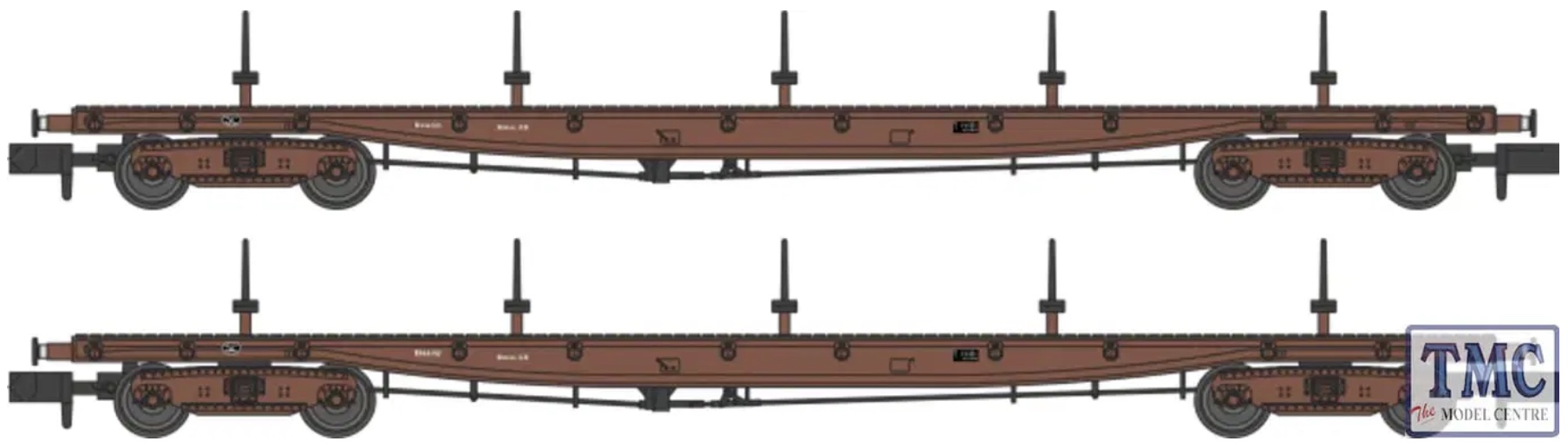
RT-OO-BRV-401 Revolution Trains OO Gauge Twin pack Borail EB bauxite livery w/ 5 bolsters B946189 & B946192. N gauge artwork used for illustration purposes. Explore the range.
Introduced at the end of the 1950s, 'Borail' wagons were designed primarily to carry heavy and awkward loads such as pre-stressed concrete beams, girders, and long lengths of rail. Two main variants existed:
- Borail EB (Diag 1/483): Featuring a distinctive 'fishbelly' deck
- Borail EC (Diag 1/482): Built with a plain deck
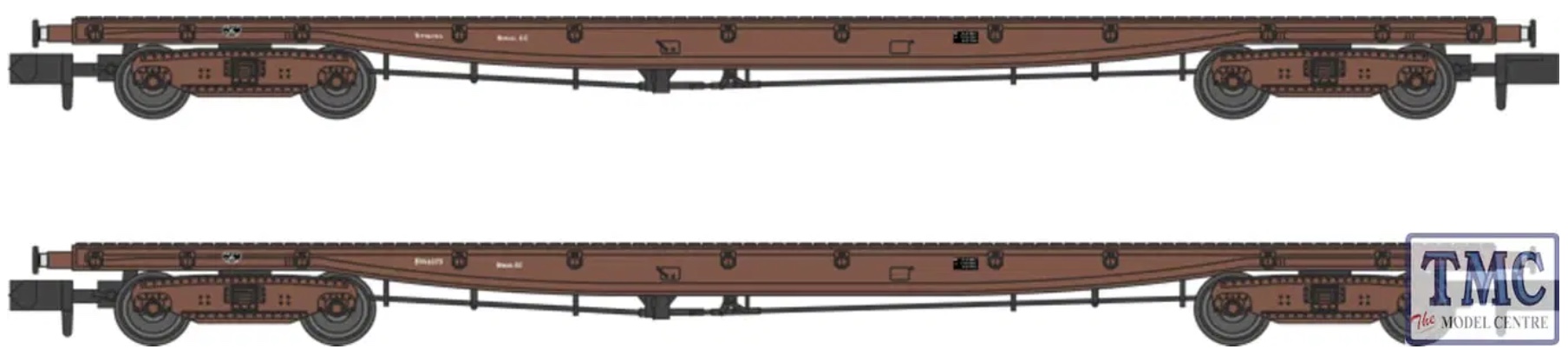
These wagons ran on 8ft plate bogies and were fitted with vacuum brakes. By the 1970s, they were reclassified under the TOPS system as BRV.
Evolution into air-braked variants
In the early 1980s, around 150 BRV wagons were upgraded with air brakes, Y25 bogies and reinforced decks.
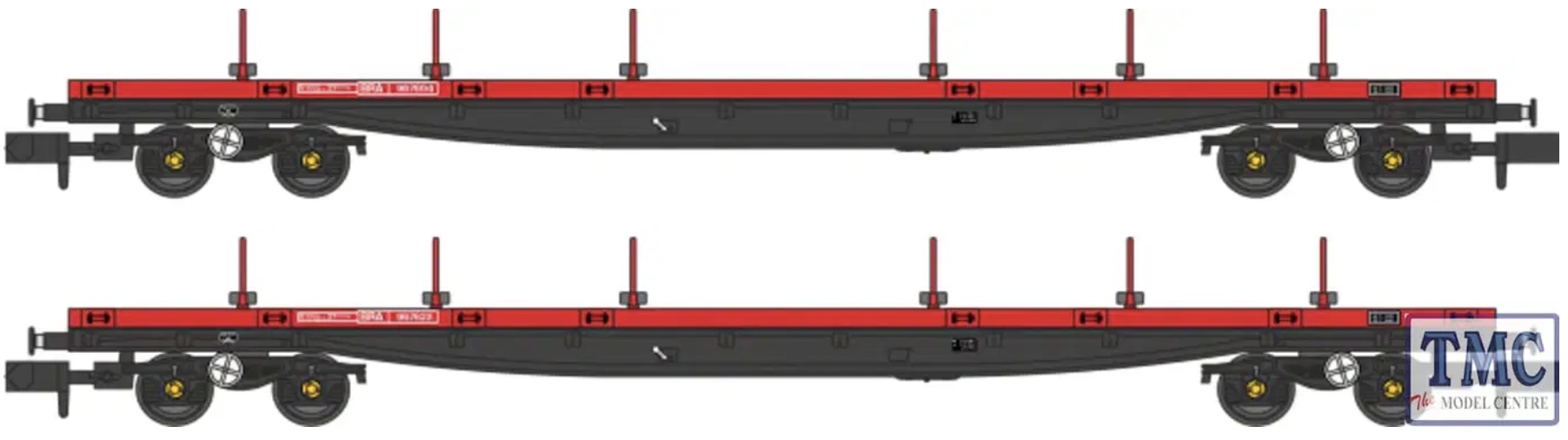
These upgraded wagons were reclassified as BRA and used in the Speedlink network for carrying rail. Modifications included increasing the number of stanchions from five to six and adding tensioning ratchets for improved load security.
Soon after, many transitioned into engineers’ use, earning the nickname 'Mullet' and receiving the TOPS code YLA.
Further conversions: 'Parr' and 'Super Tench'
Some wagons were rebuilt without bolsters and fitted with longitudinal timbers for carrying sleepers. These versions also featured end flaps and small corner footsteps and were dubbed YQA 'Parr'.
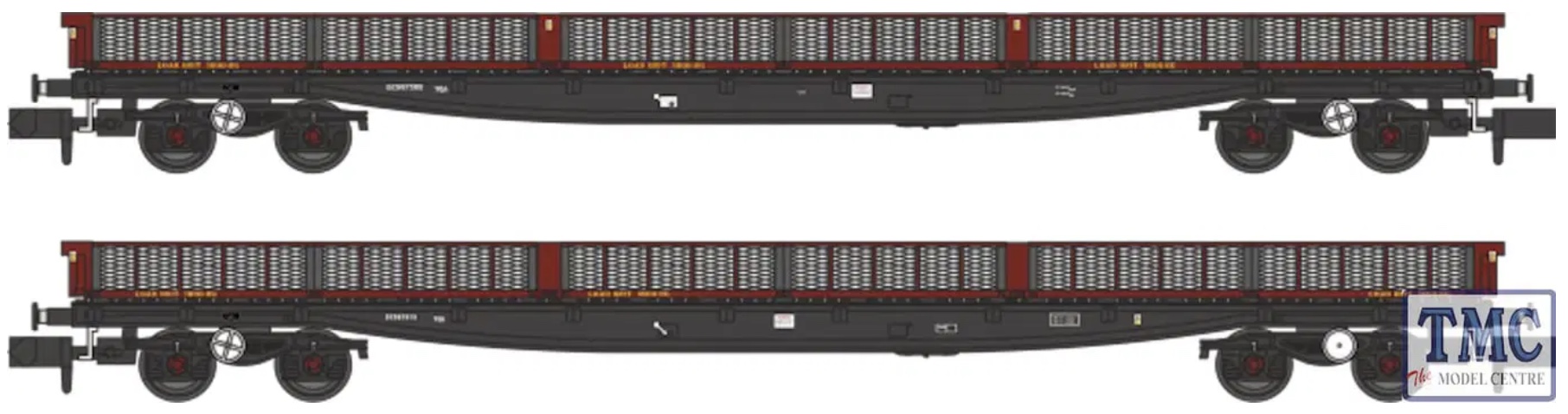
YQA 'Super Tench'
From 2010 onwards, further rebuilds created the Super Tench variant. These wagons were fitted with:
- ISO engineers’ modules
- Drop-down doors
- Mesh sides
Despite retaining the YQA classification, they became widely known as 'Super Tench'.
Explore the complete range to secure yours today, here!
In service today
Thanks to their strength and versatility, 'Mullet', 'Parr', and 'Super Tench' wagons remain in active use. They are commonly seen transporting rails and sleepers, engineering equipment and waste materials.
Their ability to handle a wide variety of loads has ensured their longevity within the engineers’ fleet.
The Revolution Trains models
Revolution Trains’ arrivals capture the full diversity of these wagons. Key features include:
- Coverage of multiple variants across eras
- Tooling for detailed differences between wagon types
- Accurate buffer and brake wheel configurations
This attention to detail allows modellers to recreate highly specific and realistic formations. As part of the development process, Revolution Trains conducted detailed research, including a visit to the Dean Forest Railway, where a preserved YQA wagon was measured and examined.
Whether you’re modelling Speedlink-era freight, engineers’ trains, or modern infrastructure operations, these wagons offer a fascinating glimpse into decades of railway evolution—and a versatile addition to any layout.