

Heavyweight mineral exclusives for 'OO' – got yours?
Introduced in 1952, the BR 24.5T mineral wagon was designed as a higher-capacity successor to the familiar 16T wagons that had dominated British freight since before nationalisation. Built between 1952 and 1962, a total of 3,395 were produced, intended to improve efficiency in the movement of coal and other bulk materials across the network.
In design, the 24.5T wagons followed the traditional open mineral layout but on a larger scale. They featured a longer wheelbase of around 12T and a steel-bodied construction, with most examples fitted with two side doors per side for unloading. Both welded and pressed steel versions existed, alongside a range of detail differences including axleboxes, buffers, and door styles. Some later variants were built without doors for use in tippler unloading systems. From the late 1950s, a yellow triangle marking was applied to indicate their increased load capacity.
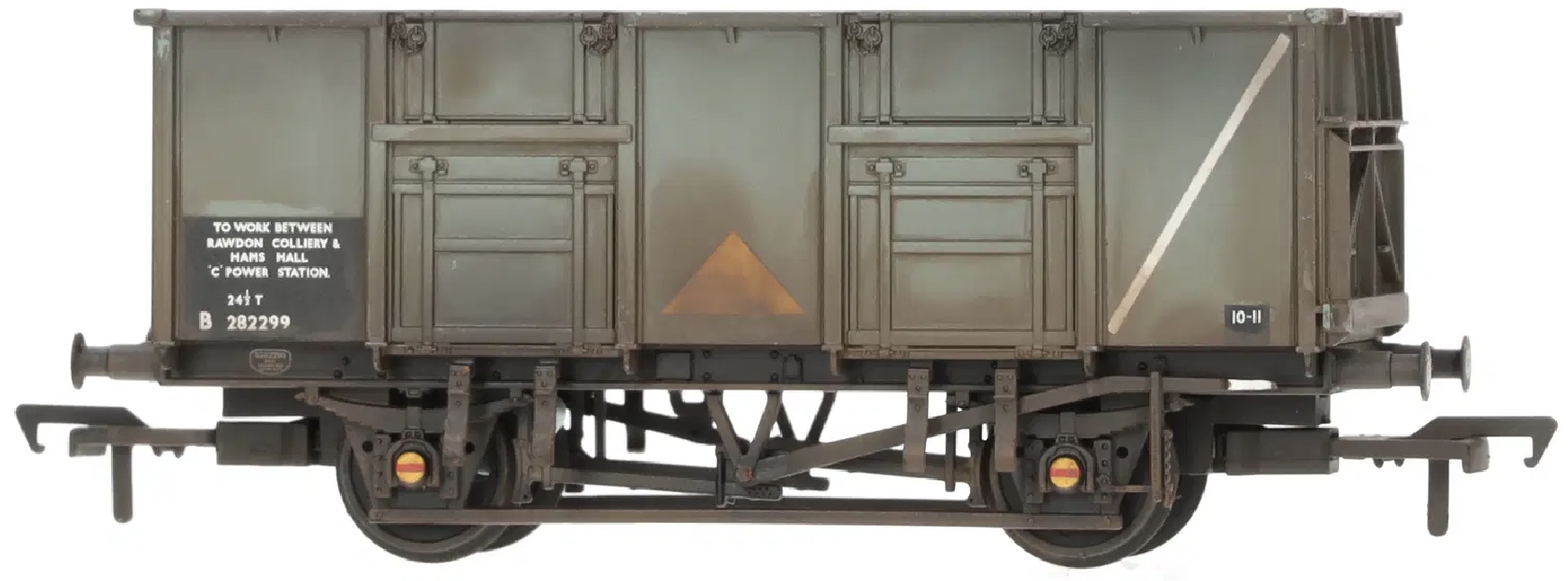
Our exclusive wagon commissions from Bachmann are further enhanced with our Deluxe weathering. There's enough variety to create a great-looking prototypical lengthy block freight rake, too! Explore our complete range, here.
Operationally, these wagons were used nationwide and were most commonly seen carrying coal to power stations and industrial sites, though they were equally suited to stone, aggregates, and other loose materials. They often ran in block formations, offering improved efficiency compared to earlier, smaller wagons. However, like much of the BR mineral fleet of the period, they were unfitted, lacking continuous brakes, which limited their speed and operational flexibility.
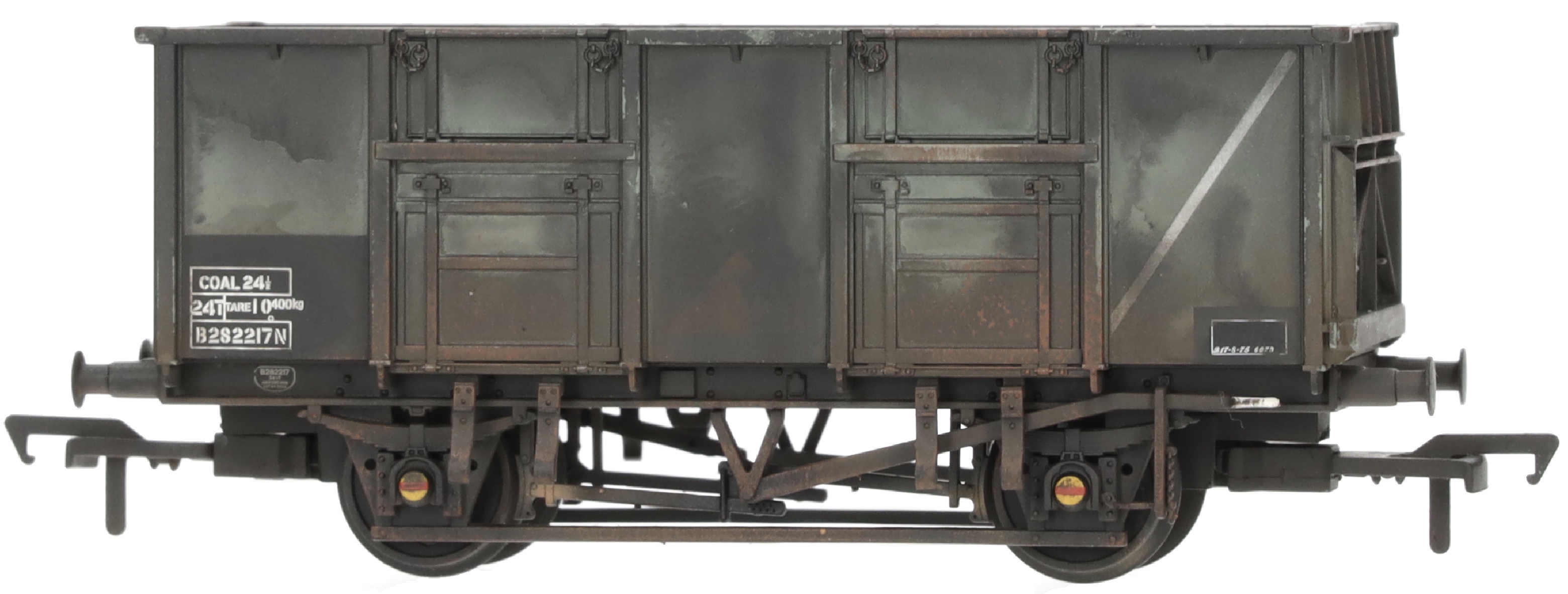
Explore the complete range, here.
Despite their advantages, the 24.5T wagons had a relatively short working life. By the late 1960s, developments in freight handling—particularly the introduction of air-braked stock and purpose-built hopper wagons—began to render them obsolete. The shift towards merry-go-round coal trains further accelerated their decline, and most were withdrawn by the early 1980s.
Today, the 24.5T mineral wagon is best understood as a transitional design, bridging the gap between traditional loose-coupled freight operation and the more modern, efficient systems that followed. For railway modellers, they offer considerable appeal, being suitable for layouts spanning the 1950s through to the early 1980s, and lending themselves particularly well to long, heavily weathered mineral trains typical of the steam and early diesel eras.